Hudson, T. (2017). Six strategies to reach, teach, and close math gaps for Latino English language learners in elementary and middle school. Bellevue, WA: DreamBox Learning.
Hudson, T. (2017). Six strategies to reach, teach, and close math gaps for Latino English language learners in elementary and middle school. Bellevue, WA: DreamBox Learning.
Bowen, S. K., & Baker, S. (2022). Family engagement: Developing partnerships for d/Deaf and hard of hearing multilingual learners. In Deaf and Hard of Hearing Multilingual Learners (pp. 30-66). Routledge.
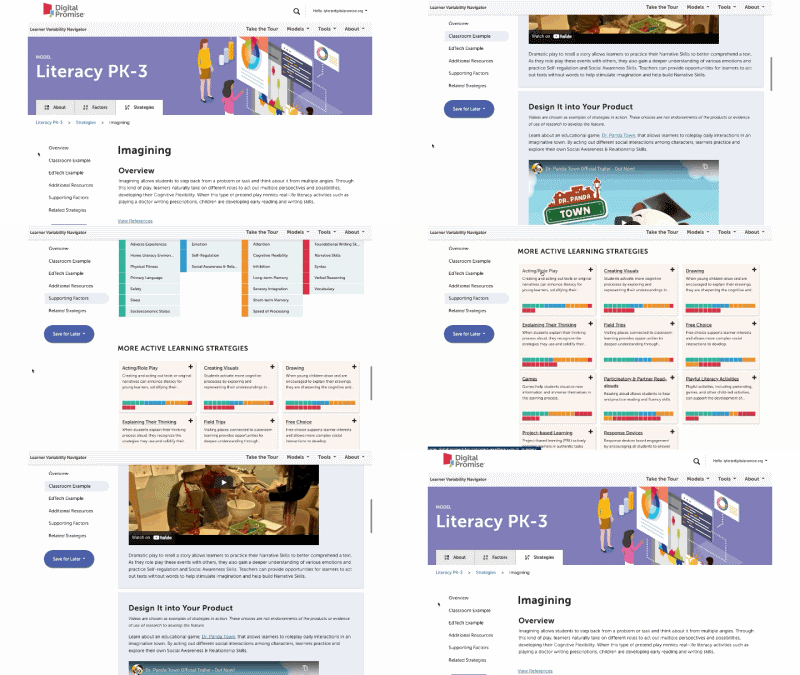
As learners make decisions about what to include as part of a dramatization, they must comprehend, recall, and carefully reflect on how to represent the characters and events from the text.
Mercer, S., & Ryan, S. (2009). A mindset for EFL: Learners' beliefs about the role of natural talent. ELT Journal, 70(3), 436-444.
Mercer, S., & Ryan, S. (2009). A mindset for EFL: Learners' beliefs about the role of natural talent. ELT Journal, 70(3), 436-444.
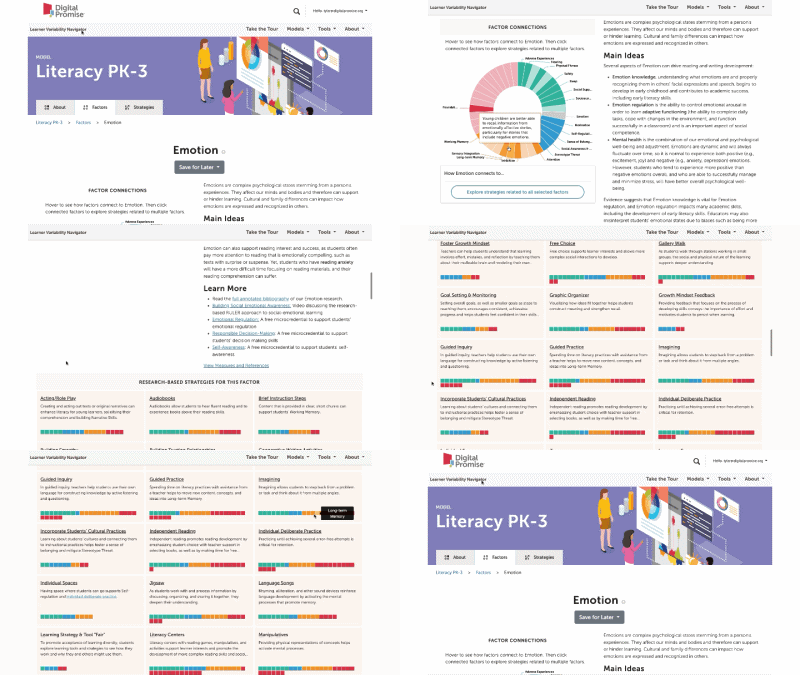
By allowing learners to elect when to use such techniques, products help students develop their own abilities to regulate their Emotions and gain a better understanding of themselves.
This kind of stimulation also helps meet the needs of learners who seek additional sensory input to better support their learning.
This kind of stimulation also helps meet the needs of learners who seek additional sensory input to better support their learning.
Song, K..H., & Coppersmith, S.A. (2020). Working toward linguistically and culturally responsive math teaching through a year-long urban teacher training program for English learners. Journal of Urban Mathematics Education, 13(2), 60-86.
 Except where otherwise noted, content on this site is licensed under a Creative Commons Attribution-NonCommercial 4.0 International License


Already a user? LOG IN