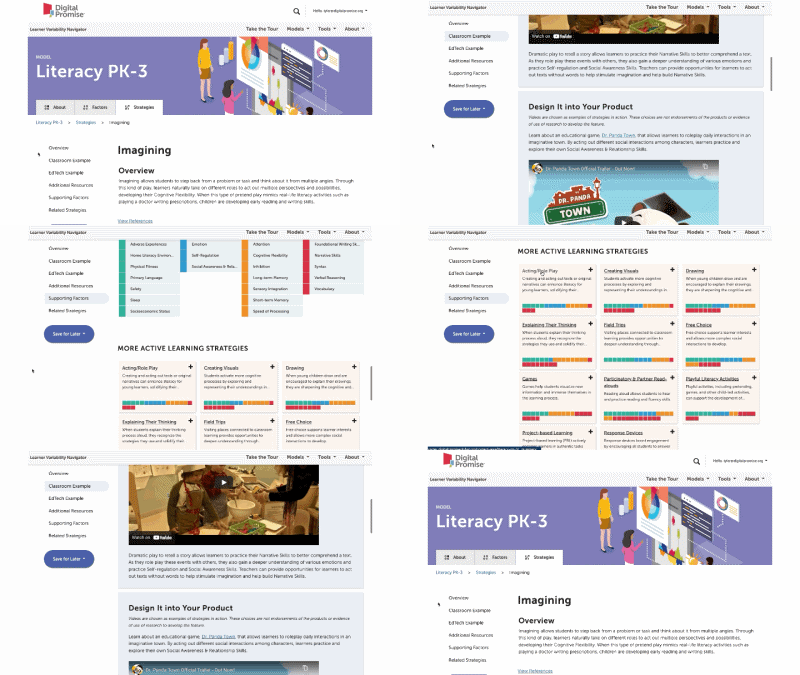
They can also provide voice recorders for learners to share their mathematical thinking with their teachers for feedback.
Chou, M. H. (2014). Assessing English vocabulary and enhancing young English as a Foreign Language (EFL) learners' motivation through games, songs, and stories. Education 3-13, 42(3), 284-297.
Makeme, B. (2013). Challenges in mainstreaming learners with visual impairment in Botswana secondary schools (Doctoral dissertation, University of the Free State).
Makeme, B. (2013). Challenges in mainstreaming learners with visual impairment in Botswana secondary schools (Doctoral dissertation, University of the Free State).
Wagner, K., Kimura, K., Cheung, P., & Barner, D. (2015). Why is number word learning hard? Evidence from bilingual learners. Cognitive psychology, 83, 1-21.
Duhaney, L. M. G., & Duhaney, D. C. (2000). Assistive technology: Meeting the needs of learners with disabilities. International Journal of Instructional Media, 27(4), 393-401.
Teaching learners how to spell by understanding systematic phonetic and spelling patterns can help improve their Vocabulary and their Phonological and Orthographic Processing.
For learners with low Working Memory, graphic organizers hold onto the information for them.
Reid-Griffin, A., Sterrett, W., & Stanback, A. (2020). Project-Based Learning (PjBL): Providing a community of engagement for middle school learners. Journal of Classroom Interaction, 55(1), 4-25.
Reid-Griffin, A., Sterrett, W., & Stanback, A. (2020). Project-Based Learning (PjBL): Providing a community of engagement for middle school learners. Journal of Classroom Interaction, 55(1), 4-25.
 Except where otherwise noted, content on this site is licensed under a Creative Commons Attribution-NonCommercial 4.0 International License


Already a user? LOG IN