Project-based learning (PBL) actively engages learners in authentic tasks designed to create products that answer a given question or solve a problem.
Project-based learning (PBL) actively engages learners in authentic tasks designed to create products that answer a given question or solve a problem.
Project-based learning (PBL) actively engages learners in authentic tasks designed to create products that answer a given question or solve a problem.
They can also design interactive platforms that allow for a blend of child-initiated activities and adult scaffolding, incorporate features like modeling, feedback, and questioning to achieve specific learning objectives, and integrate guided collaborative play elements to support learners in guided play.
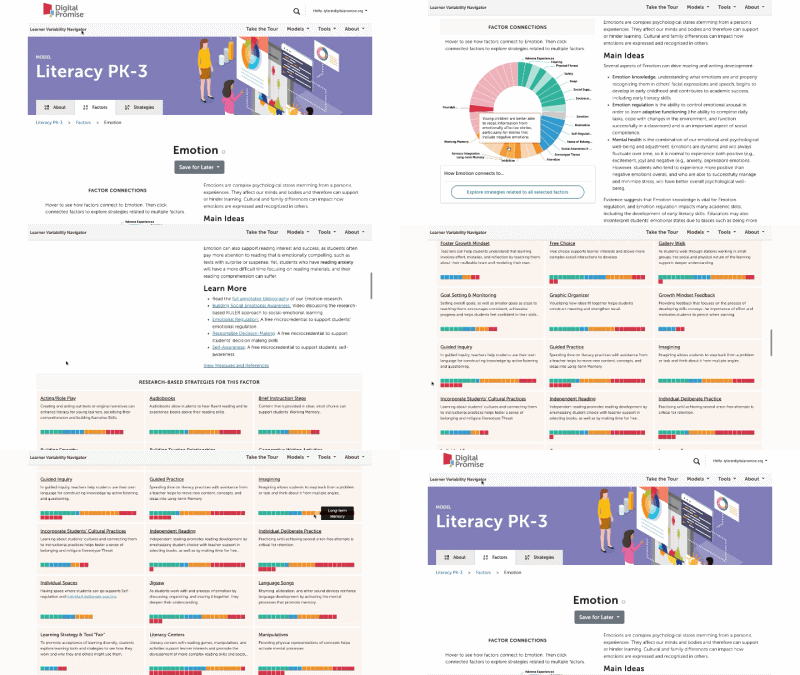
Free choice supports learner interests and allows more complex social interactions to develop.
For learners with low Working Memory, graphic organizers structure and hold onto the information for them.
Biazotto André, A. (2018). Learning about and becoming aware of reading strategies and metacognition in English by adult second language learners. [Doctoral dissertation, Illinois State University].
Bigelow, M., & Schwarz, R. L. (2010). Adult English language learners with limited literacy. National Institute for Literacy. Washington, DC.
Through guided practice, learners rephrase, elaborate, summarize, recall, and question new content, leading to sufficient rehearsal for deeper learning.
Providing individual choice, flexibility, and autonomy to students aligns with Universal Design for Learning (UDL) principles, which promotes personalized learning by recognizing and addressing the diverse needs, preferences, and interests of individual learners.
 Except where otherwise noted, content on this site is licensed under a Creative Commons Attribution-NonCommercial 4.0 International License


Already a user? LOG IN