Importantly, educators should work to communicate learner and family strengths.
Artistic expression allows learners to exhibit what they know and can do in alternative ways that lead to greater Motivation and retention of information.
Rhodes, C. M. (2018). Culturally responsive teaching with adult learners: A review of the literature. International Journal of Adult Vocational Education and Technology (IJAVET), 9(4), 33-41.
When learners create math-focused goals, plan out steps to achieve them, and check their progress against these steps, they strengthen their self-efficacy and Math Mindset as they build their capacity to successfully tackle difficult challenges.
When learners create math-focused goals, plan out steps to achieve them, and check their progress against these steps, they strengthen their self-efficacy and Math Mindset as they build their capacity to successfully tackle difficult challenges.
Recess and physical education are ways for learners to exercise, which is essential for increasing oxygen flow to the brain and brain cell growth.
Providing individual choice, flexibility, and autonomy to students aligns with Universal Design for Learning (UDL) principles, which promotes personalized learning by recognizing and addressing the diverse needs, preferences, and interests of individual learners.
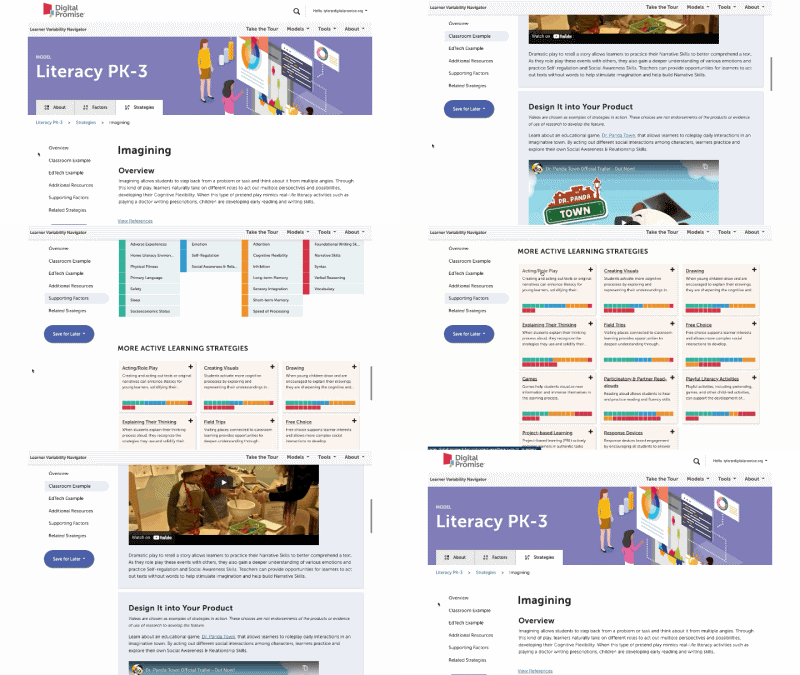
Through this kind of play, learners naturally take on different roles to act out multiple perspectives and possibilities, developing their Cognitive Flexibility.
When learners think about a question then discuss their thoughts with a partner before sharing with the larger group, everyone participates and practices their skills.
Coleman, R., & Goldenberg, C. (2009). What does research say about effective practices for English learners? Introduction and part I: Oral language proficiency. Kappa Delta Pi Record, 46(1), 10-16.
 Except where otherwise noted, content on this site is licensed under a Creative Commons Attribution-NonCommercial 4.0 International License


Already a user? LOG IN