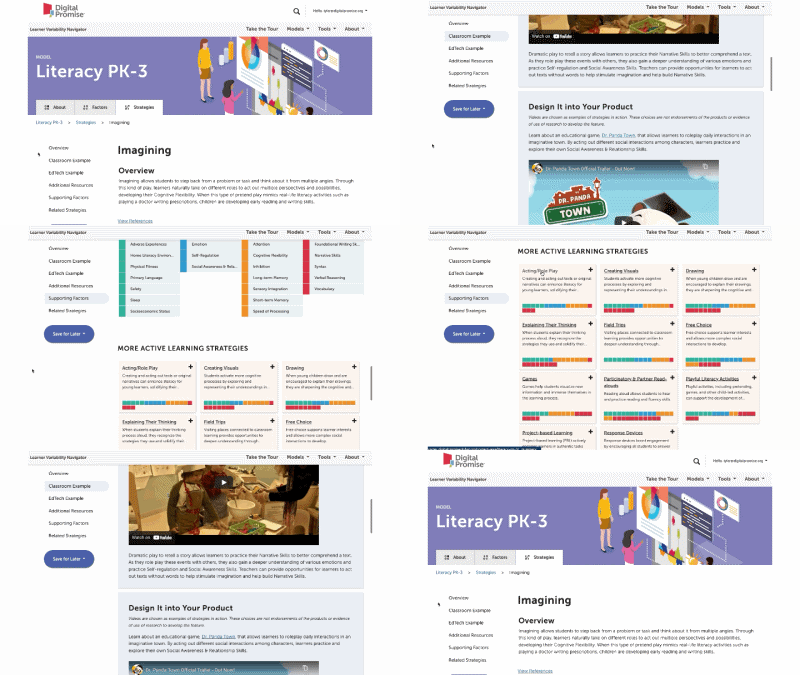
For example, a product can produce a visual map of learners' progress and provide diverse mediums, such as drawing, for learners to record their reflections.
deRamirez, R.D., & Shapiro, R.S. (2007). Cross-language relationship between Spanish and English oral reading fluency among Spanish-speaking English language learners in bilingual education classrooms. Psychology in the Schools, 44(8), 795-806.
Developers can design tasks that allow learners to actively reread and practice oral reading with guidance, thus improving the learners' oral reading fluency and their comfort with reading aloud.
With verbal repetition, learners also can personalize and interact with information, activating multiple brain pathways to help move knowledge from Short- to Long-term Memory.
Cooperative emergent writing activities, such as having learners practice letter formation and sounds together, can support Alphabet Knowledge and Phonological Awareness.
Setting up the classroom so students can move together in small groups helps learners link the cognitive benefits of movement with the social emotional benefits of peer-assisted learning.
Listening to others read exposes learners to diverse texts that may be above their usual reading level while supporting the development of their literacy skills.
Combining movement and repetition allows learners to practice learned concepts in an engaging way, promoting Short-term and Long-term Memory formation.
Zhang, J., & Pelttari, C. (2014). Exploring the emotions and needs of English language learners: Facilitating pre-service and in-service teachers' recognition of the tasks facing language learners. Journal of Multilingual and Multicultural Development, 35(2), 179-194.
Zhang, J., & Pelttari, C. (2014). Exploring the emotions and needs of English language learners: Facilitating pre-service and in-service teachers' recognition of the tasks facing language learners. Journal of Multilingual and Multicultural Development, 35(2), 179-194.
 Except where otherwise noted, content on this site is licensed under a Creative Commons Attribution-NonCommercial 4.0 International License


Already a user? LOG IN