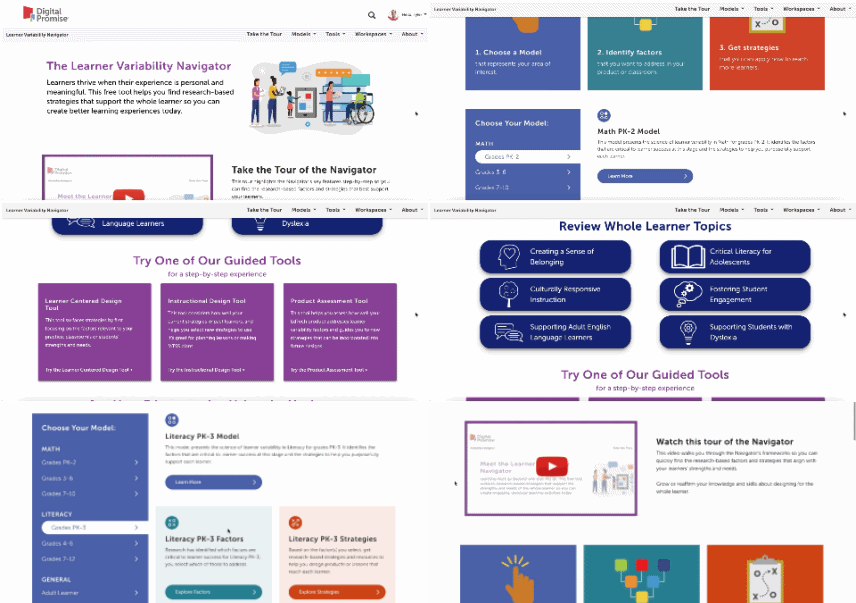
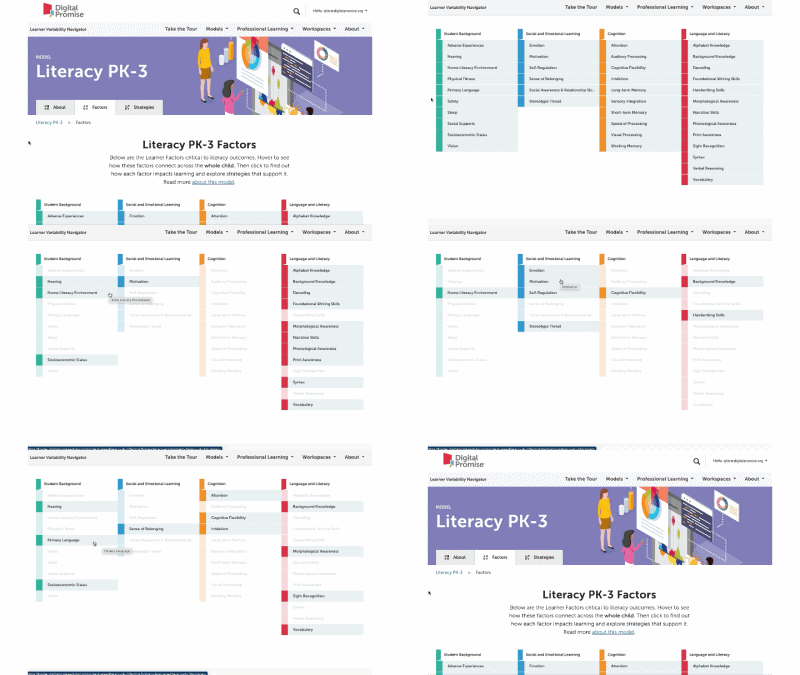
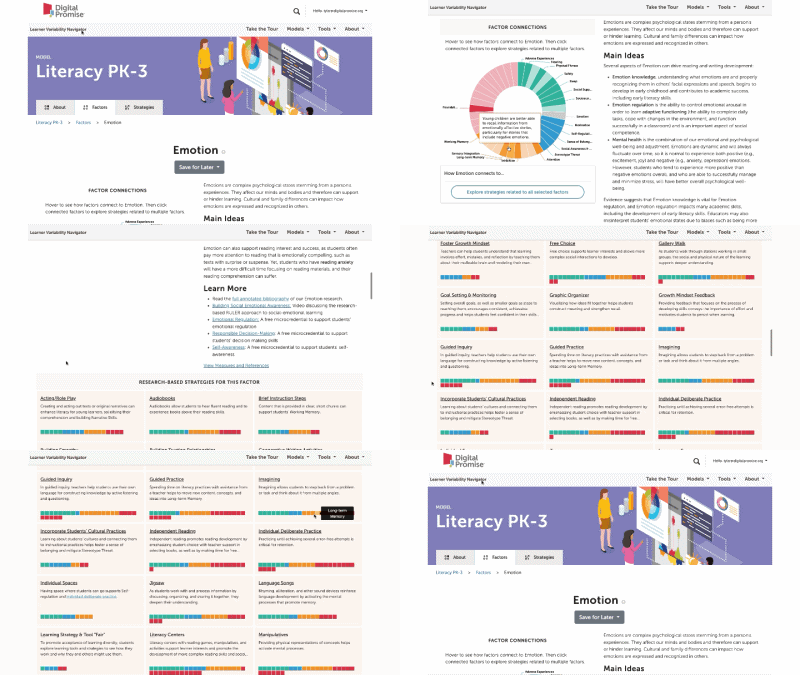
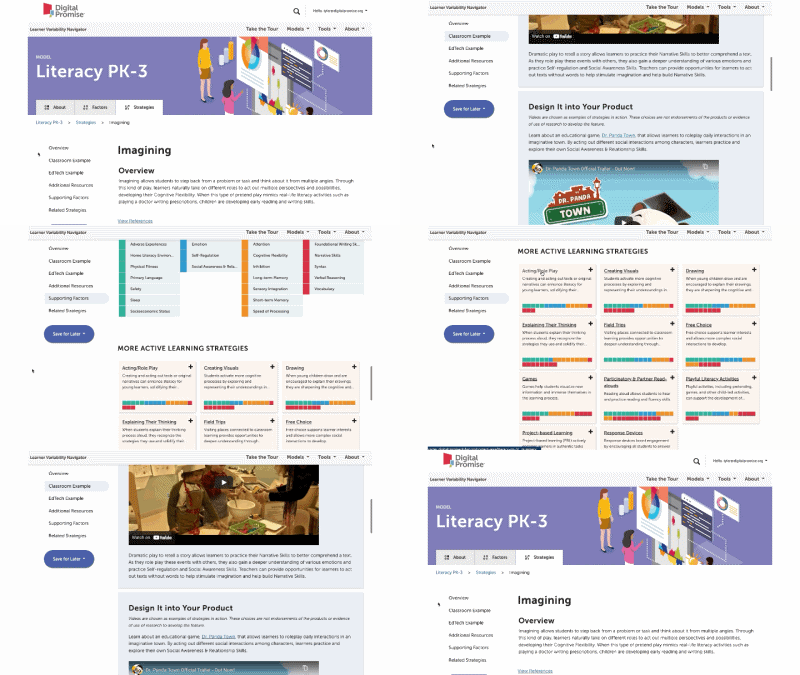
Self-regulation is a limited capacity resource meaning that it can become depleted over the course of the task or day, or can become drained when students are spending much of their energy working to focus in the classroom.
Fisher, K. (2005). Linking pedagogy and space. Victoria University Australia: Department of Education and Training. Retrieved from https://www.education.vic.gov.au/Documents/school/teachers/teachingresources/interdisciplinary/ict/pedagspace.pdf
Cohen, J. (2001). Social and emotional education: Core concepts and practices. In J. Cohen (Ed.), _Caring classrooms/intelligent schools: The social emotional education of young children _(Chapter 1). New York: Teachers College Press.
Teachers can establish quiet spaces in the classroom with supplies such as pencils, paper, laptops or tablets, models, and resources to support student practice.
By reducing extraneous noise and distractions, learners can better direct their cognitive resources.
Cavicchiolo, E., Manganelli, S., Bianchi, D., Biasi, V., Lucidi, F., Girelli, L., ... & Alivernini, F. (2023). Social inclusion of immigrant children at school: The impact of group, family and individual characteristics, and the role of proficiency in the national language. International Journal of Inclusive Education, 27(2), 146-166.
For example, setting a goal of reading one chapter a night can help a student feel confident that they can read a longer book.
Self-regulation is the ability to alter and regulate our emotional and behavioral responses flexibly in order to meet a given goal.
Teachers can establish quiet spaces in the classroom with supplies such as pencils, paper, laptops or tablets, models, and resources to support student practice.
Fuchs, D., & Fuchs, L.S. (2005). Peer-assisted learning strategies: Promoting word recognition, fluency, and reading comprehension in young children. The Journal of Special Education, 39(1), 34-44.
 Except where otherwise noted, content on this site is licensed under a Creative Commons Attribution-NonCommercial 4.0 International License


Already a user? LOG IN