Prion, S., & Mitchell, M. (2008). Audiobooks and cognitive Load. In C. Bonk, M. Lee, & T. Reynolds (Eds.), Proceedings of e-learn: World conference on e-learning in corporate, government, healthcare, and higher education 2008 (pp. 1917-1926). Chesapeake, VA: Association for the Advancement of Computing in Education (AACE).
Having multiple resources available for students exposes them to relevant genres that they encounter in the 21st century, like blogs, videos, and other online publications.
Strickland, T. K., & Maccini, P. (2013). The effects of the concrete–representational–abstract integration strategy on the ability of students with learning disabilities to multiply linear expressions within area problems. Remedial and Special Education, 34(3), 142-153.
Establishing large and diverse classroom libraries, particularly with series books, is crucial for empowering student independence and promoting student engagement in independent reading.
Merga, M. K. (2015). Access to books in the home and adolescent engagement in recreational book reading: Considerations for secondary school educators. English in Education, 49(3), 197-214.
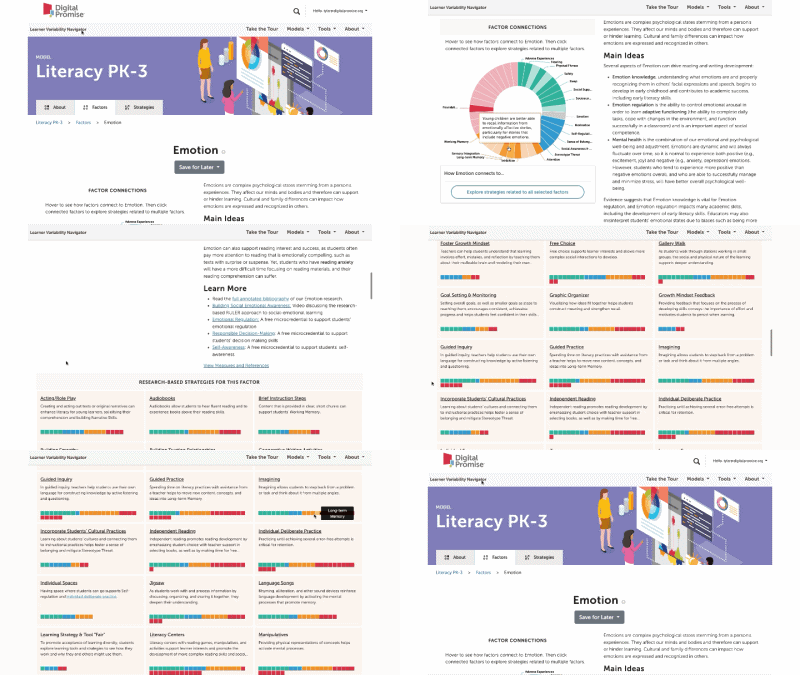
It's important for educators to develop their own cultural awareness in order to understand that students' cultural backgrounds may affect how they show emotions.
Shepard, L. A., Penuel, W. R., & Pellegrino, J. W. (2018). Using learning and motivation theories to coherently link formative assessment, grading practices, and large-scale assessment. Educational measurement: Issues and Practice, 37(1), 21-34.
A student's Literacy Environment includes the resources provided by their home, school, and community that helps them develop their literacy skills.
Cheryan, S., Meltzoff, A. N., & Kim, S. (2011). Classrooms matter: The design of virtual classrooms influences gender disparities in computer science classes. Computers & Education, 57(2), 1825-1835.Dee, T. S., & Penner, E. K. (2017). The causal effects of cultural relevance: Evidence from an ethnic studies curriculum. American Educational Research Journal, 54(1), 127-166.
Audiobooks allow students to hear fluent reading and to experience books above their reading skills.
 Except where otherwise noted, content on this site is licensed under a Creative Commons Attribution-NonCommercial 4.0 International License


Already a user? LOG IN