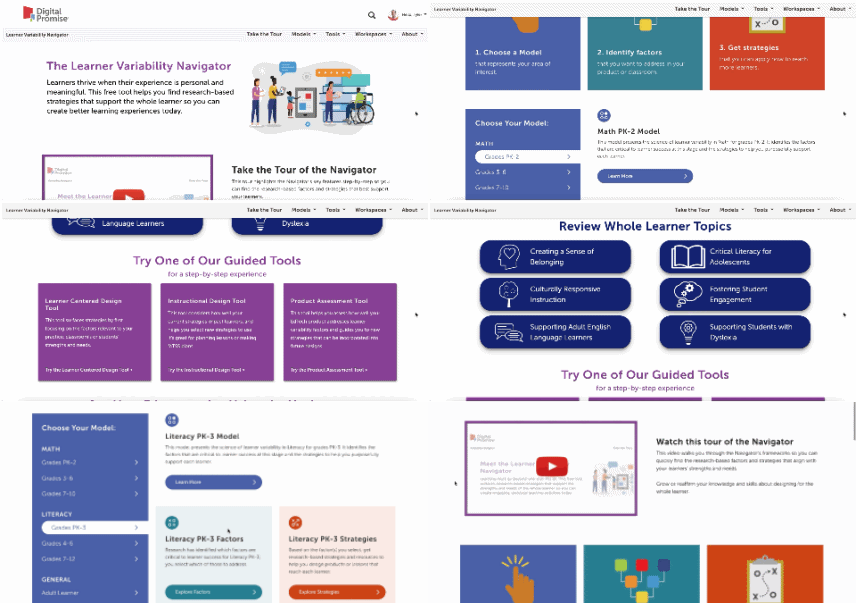
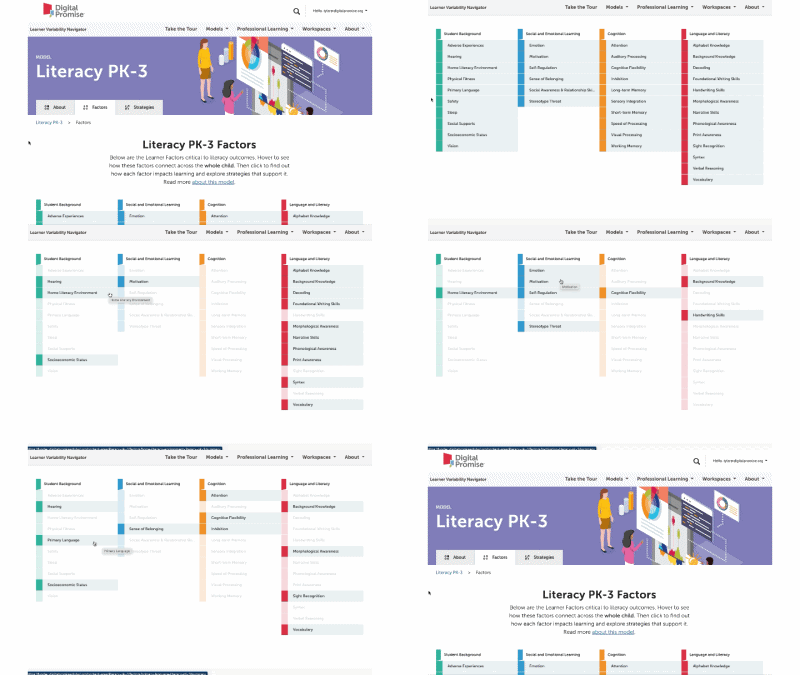
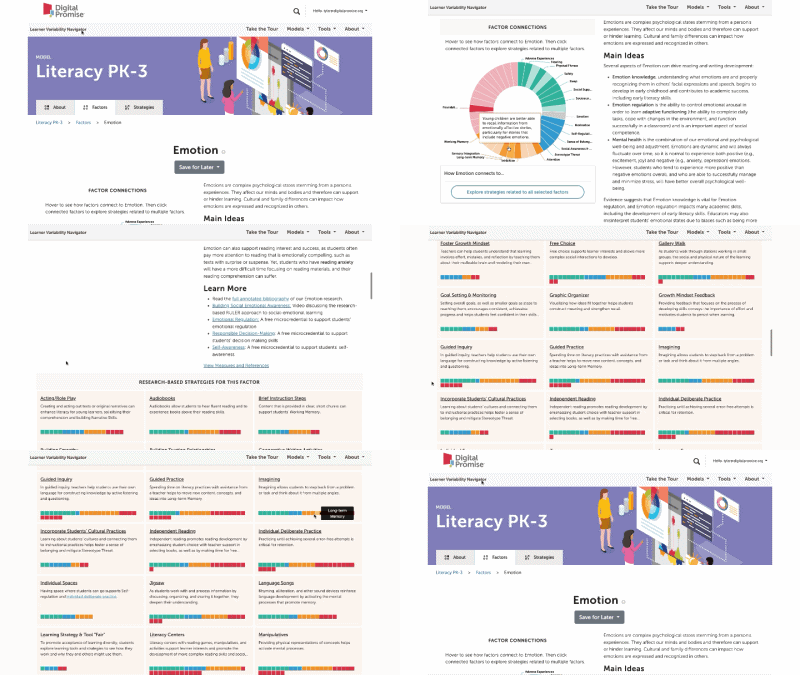
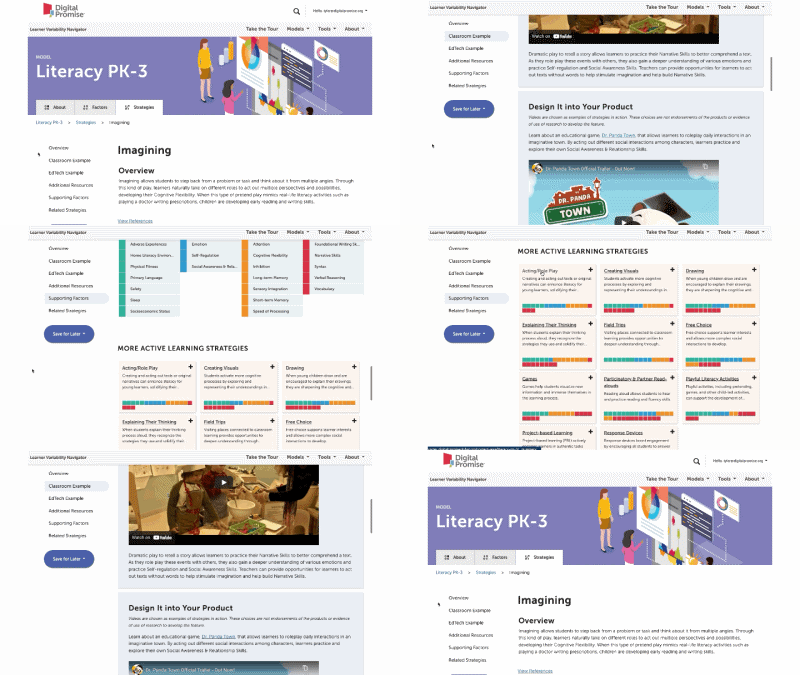
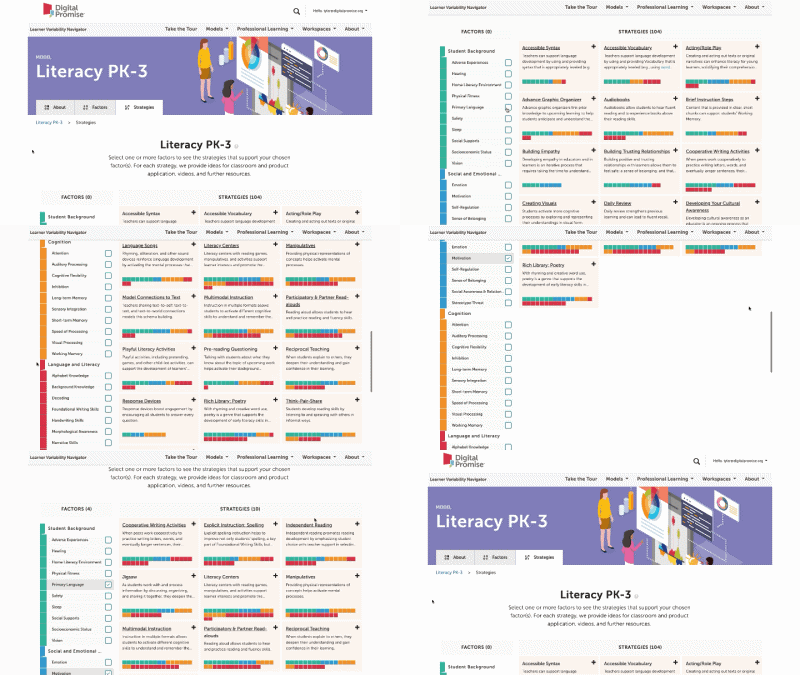
Online platforms encouraging video conferencing and digital chats can be used to connect educators and students to engage in meaningful conversation Additionally, creating a space where educators can record notes about empathy interviews in a discreet and non-interfering way can help educators use the information gleaned from interviews to inform classroom practice.
O'Conner, R., De Feyter, J., Carr, A., Luo, J. L., & Romm, H. (2017). A review of the literature on social and emotional learning for students ages 3–8: What's Known Teacher and classroom strategies that contribute to social and emotional learning (part 3 of 4). Washington, D.C.: Institute of Education Sciences, Department of Education.
O'Brien, M., Makar, K., & Fielding-Wells, J. (2015). How inquiry pedagogy enables teachers to facilitate growth mindsets in mathematics classrooms. In M. Marshman, V. Geiger, & A. Bennison (Eds.), Mathematics education in the margins (Proceedings of the 38th annual conference of the Mathematics Education Research Group of Australasia) (pp. 469–476). Sunshine Coast: MERGA.
O'Conner, R., De Feyter, J., Carr, A., Luo, J. L., & Romm, H. (2017). A review of the literature on social and emotional learning for students ages 3–8: What's Known Teacher and classroom strategies that contribute to social and emotional learning (part 3 of 4). Washington, D.C.: Institute of Education Sciences, Department of Education.
Cohen, J. (2001). Social and emotional education: Core concepts and practices. In J. Cohen (Ed.), Caring classrooms/intelligent schools: The social emotional education of young children (Chapter 1). New York, NY: Teachers College Press.
American Psychological Association, Coalition for Psychology in Schools and Education. (2015). Top 20 principles from psychology for preK–12 teaching and learning. Retrieved from http:// www.apa.org/ed/schools/cpse/top-twenty-principles.pdf
Meyer, N. K., & Bouck, E. C. (2014). The impact of text-to-speech on expository reading for adolescents with LD. Journal of Special Education Technology, 29(1), 21-33.
Casler-Failing, S. (2002). Multimodal and hands-on strategies to promote mathematical knowledge and skill development in students with a special focus on English language learners. Unpublished manuscript, University at Albany, SUNY, Albany, NY.
Mullins, N. M., Michaliszyn, S. F., Kelly-Miller, N., & Groll, L. (2019). Elementary school classroom physical activity breaks: Student, teacher, and facilitator perspectives. Advances in physiology education, 43(2), 140-148.
O'Brien, M., Makar, K., & Fielding-Wells, J. (2015). How inquiry pedagogy enables teachers to facilitate growth mindsets in mathematics classrooms. In M. Marshman, V. Geiger, & A. Bennison (Eds.), Mathematics education in the margins (Proceedings of the 38th annual conference of the Mathematics Education Research Group of Australasia) (pp. 469–476). Sunshine Coast: MERGA.
 Except where otherwise noted, content on this site is licensed under a Creative Commons Attribution-NonCommercial 4.0 International License


Already a user? LOG IN