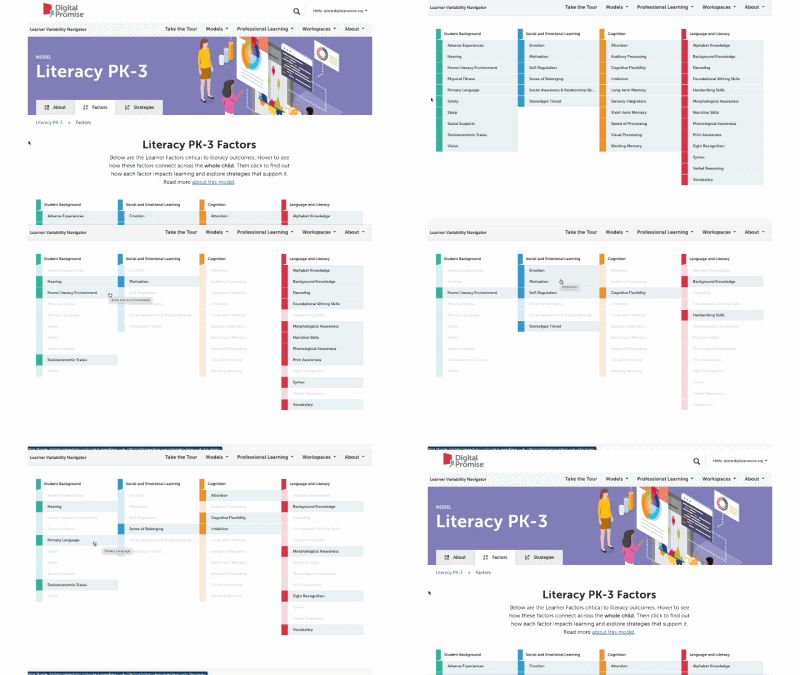
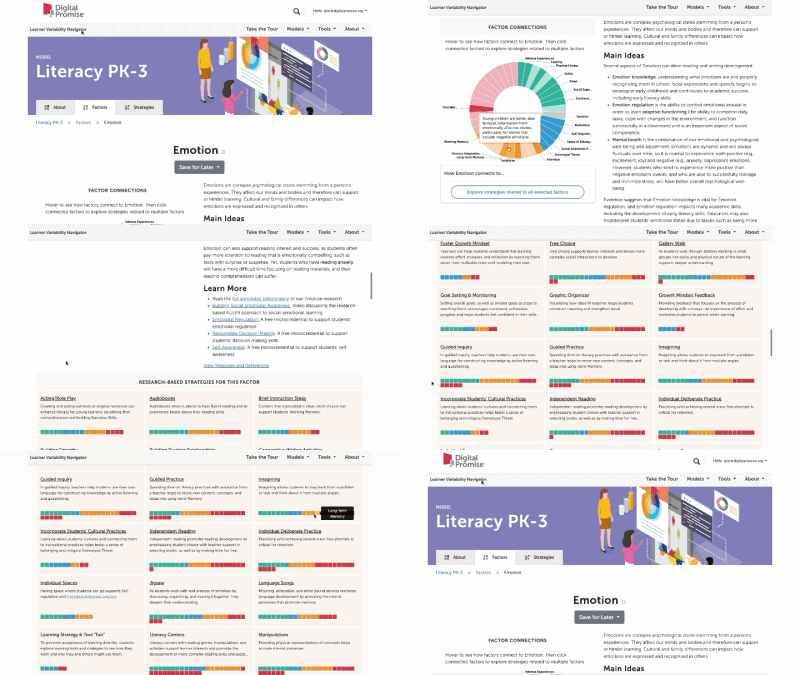
Long-term Memory allows learners to store information, such as words, facts, events, or concepts, and retrieve and make use of this information at a later time (e.
Research shows that, along with traditional reading comprehension strategies, learners use unique strategies to read the non-linear, hyperlinked structure of online texts.
Physical activity and recess in early childhood provides social, physical, and mental benefits to learners.
Providing adult learners with the opportunity to record themselves throughout the learning process, reflect on their growth, and review the recordings to analyze specific segments supports Metacognition and a Learner Mindset.
Regardless of the medium, new information should be presented in connection to learner's Background Knowledge to stimulate Motivation and help learners see relevance of the information in their lives.
Direct instruction in math strategies may support some adult learners once conceptual understanding is in place.
Learners who have been negatively affected by Adverse Experiences, English language learners, first generation college students, and adults from marginalized populations benefit greatly from having a mentor in the workplace or learning environment who can provide a sense of Safety, build Social Supports, foster intrinsic Motivation, and encourage academic persistence which contributes to a Learner Mindset.
When classrooms are intentionally designed to promote inclusion, belonging, and accessibility, they positively influence key learner factors, including Attention, Self-Regulation, Learner Mindset, and Sense of Belonging.
When classrooms are intentionally designed to promote inclusion, belonging, and accessibility, they positively influence key learner factors, including Attention, Self-Regulation, Learner Mindset, and Sense of Belonging.
When classrooms are intentionally designed to promote inclusion, belonging, and accessibility, they positively influence key learner factors, including Attention, Self-Regulation, Learner Mindset, and Sense of Belonging.
 Except where otherwise noted, content on this site is licensed under a Creative Commons Attribution-NonCommercial 4.0 International License


Already a user? LOG IN