Importantly, in adolescence learners' sources of Motivation become more social, with relevance, respect, and autonomy becoming increasingly more important in their social and academic worlds and behaviors.
Coker, A. D. (2003). African American female adult learners: Motivations, challenges, and coping strategies. Journal of Black Studies, 33(5), 654-674.
Supporting students as they develop their Speed of Processing skills helps them become quick, efficient, confident, and successful learners.
To best support Safety, open questioning, and a Learner Mindset, it is important to ensure that evaluation is not a part of the observation process.
Unfortunately, since bilingual/multilingual learners' language development in the early grades is typically less well understood, these learners are paradoxically both less likely to be identified as in need of special education services where they may need them.
For adolescent learners, the Composition process can become more robust, as learners begin to express ideas through multiple media, which includes visual, audio, and digital production.
Implementation varies substantially and results in differential effects with adult learners based on their Background Knowledge, previous educational experiences, Self-Regulation, and Learner Mindset.
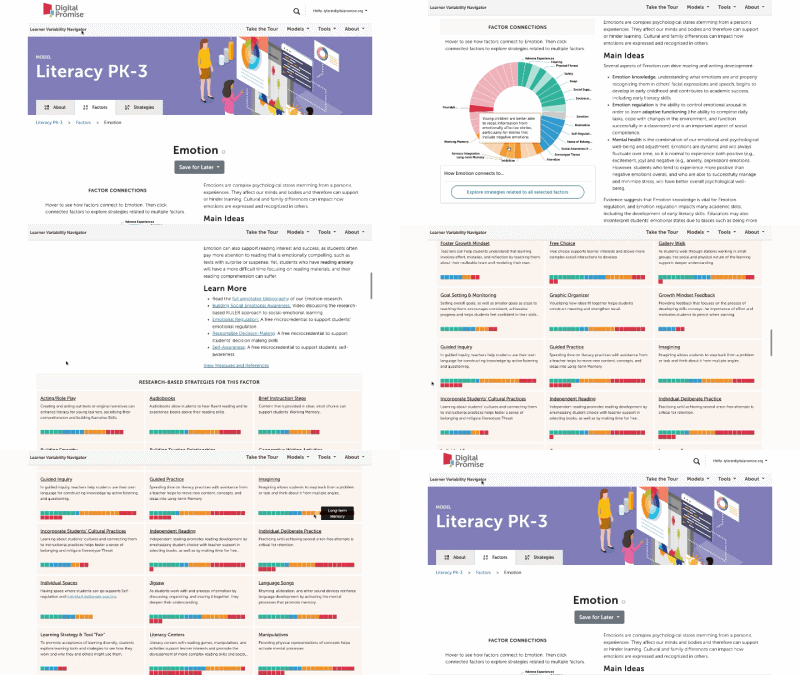
Providing students with language to discuss Emotion helps students to learn Self-Regulation skills, which can support their Learner Mindset to engage in learning opportunities and grow their Core Academic Literacies.
Estaji, M. & Mirzaii, M. (2018). Enhancing EFL learners' vocabulary learning through formative assessment: Is the effort worth expending? Language Learning in Higher Education, 8(2), 239–264
A learner's Civic Mindedness involves seeing oneself as a contributor to their community, being informed and empowered to help or include others, and joining with others to achieve common goals for the community.
 Except where otherwise noted, content on this site is licensed under a Creative Commons Attribution-NonCommercial 4.0 International License


Already a user? LOG IN