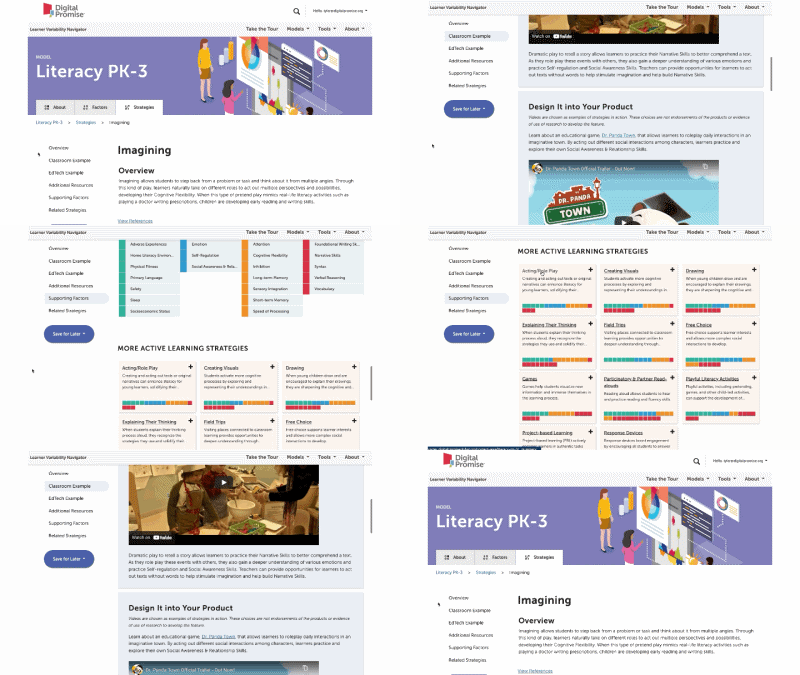
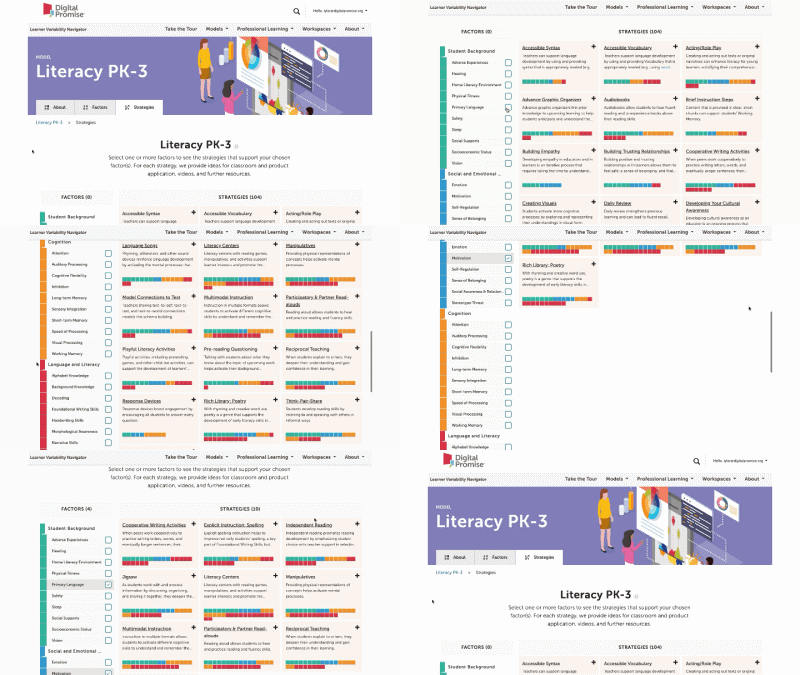
Creating and acting out texts or original narratives can enhance literacy for young learners, solidifying their comprehension and building Narrative Skills.
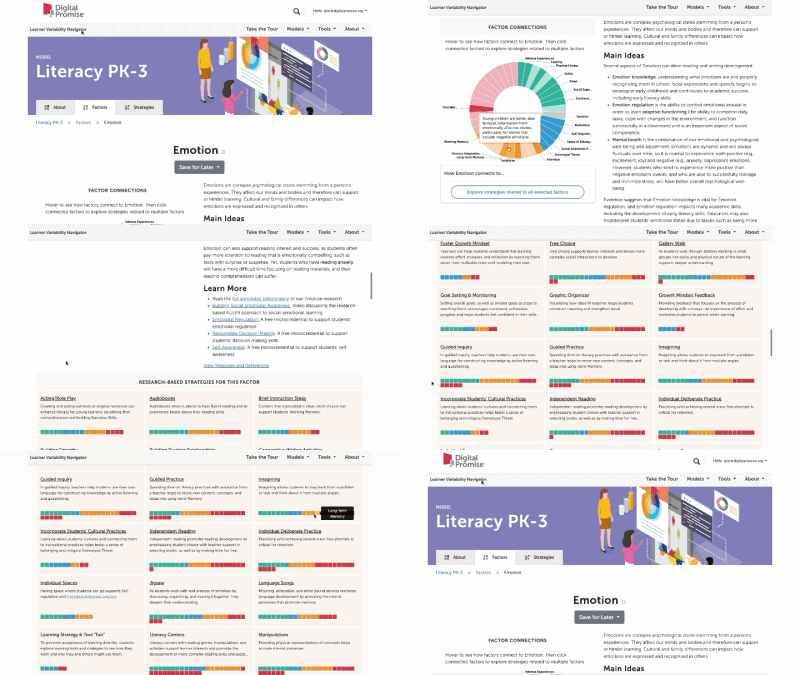
Free choice supports learner interests and can promote the development of more complex social interactions, Self-Regulation and inhibitory control.
Chunking involves breaking texts down into more manageable pieces to help learners focus their Attention while reading and to comprehend text more effectively.
In adolescence, learners often place more importance on peers and on their social lives; while the school setting is still an important context where Identity development can be supported, adolescents are more independently navigating social spaces without adult supervision.
Henrikson, R. (2019). Using online lectures to promote engagement: Recognising the self-directed learner as critical for practical inquiry. Journal of Open, Flexible and Distance Learning, 23(1), 17–32.
Providing texts in braille, large font, and with text-to-speech allows learners with visual needs to access content.
Aydinli-Mathews, J. (2007). Problem-based learning and adult english language learners. CAELA Brief, Center for Applied Linguistics.
Back, M., Han, M., & Weng, S. C. (2020). Emotional scaffolding for emergent multilingual learners through translanguaging: Case stories. Language and Education, 34(5), 387-406.
Providing access to a variety of multimodal texts that align with the interests of learners allows them to practice digital, information, and Critical Literacy.
During this time, young learners possess the essential skills for making meaning of these social identities and have increased interactions with peers and educators that contribute to Identity development.
 Except where otherwise noted, content on this site is licensed under a Creative Commons Attribution-NonCommercial 4.0 International License


Already a user? LOG IN