This practice can be particularly beneficial for learners with learning disabilities whose strengths are often overlooked due to focusing on particular challenges.
This practice can be particularly beneficial for learners with learning disabilities whose strengths are often overlooked due to focusing on particular challenges.
These programs, which can serve as assistive technology for learners with writing difficulties, support all learners by allowing them to focus on the content of their composition.
Bowen, S. K., & Baker, S. (2022). Family engagement: Developing partnerships for d/Deaf and hard of hearing multilingual learners. In Deaf and Hard of Hearing Multilingual Learners (pp. 30-66). Routledge.
Flexible grouping is a foundational instructional strategy that supports all students, including multilingual learners, and has been specifically identified as a high leverage practice due to its effectiveness for students with disabilities.
Through Peer-Assisted Learning Strategies (PALS), learners alternate in reading and sharing their thoughts with a partner by taking on the roles of a coach and player.
Carlson, R., Padron, K., & Andrews, C. (2018). Evidence-based instructional strategies for adult learners: A review of the literature. Codex (2150-086X), 4(4), 29–47.
Early, M., & Kendrick, M. (2020). Inquiry-based pedagogies, multimodalities, and multilingualism: Opportunities and challenges in supporting English learner success. Canadian Modern Language Review, 76(2), 139-154.
Gupta, A. (2019). Principles and Practices of Teaching English Language Learners. International Education Studies, 12(7), 49-57.
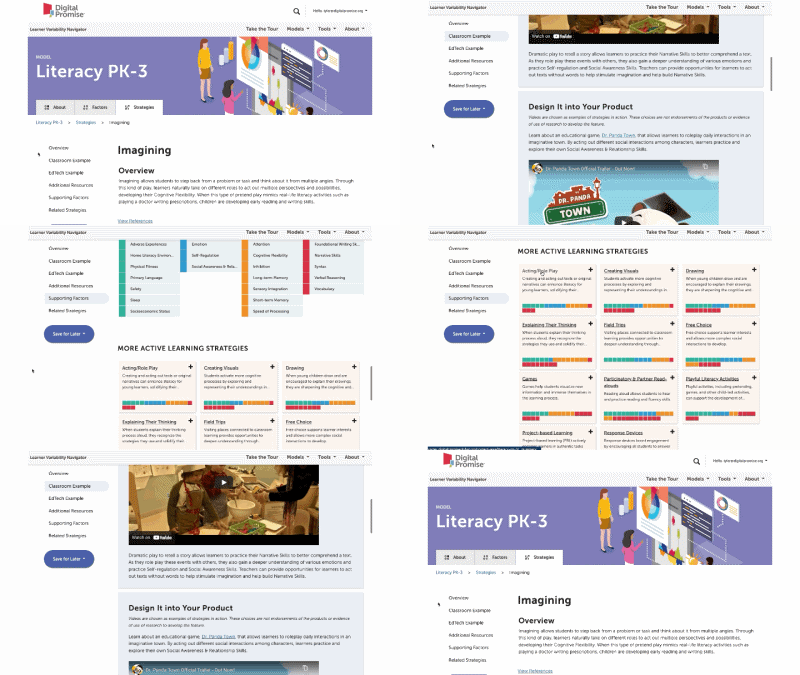
Math centers with math games, manipulatives, and activities support learner interests and promote the development of more complex math skills and social interactions.
 Except where otherwise noted, content on this site is licensed under a Creative Commons Attribution-NonCommercial 4.0 International License


Already a user? LOG IN