Clay, K., Zorfass, J., Brann, A., Kotula, A., & Smolkowski, K. (2009). Deepening content understanding in social studies using digital text and embedded vocabulary supports. Journal of Special Education Technology, 24(4), 1-16.
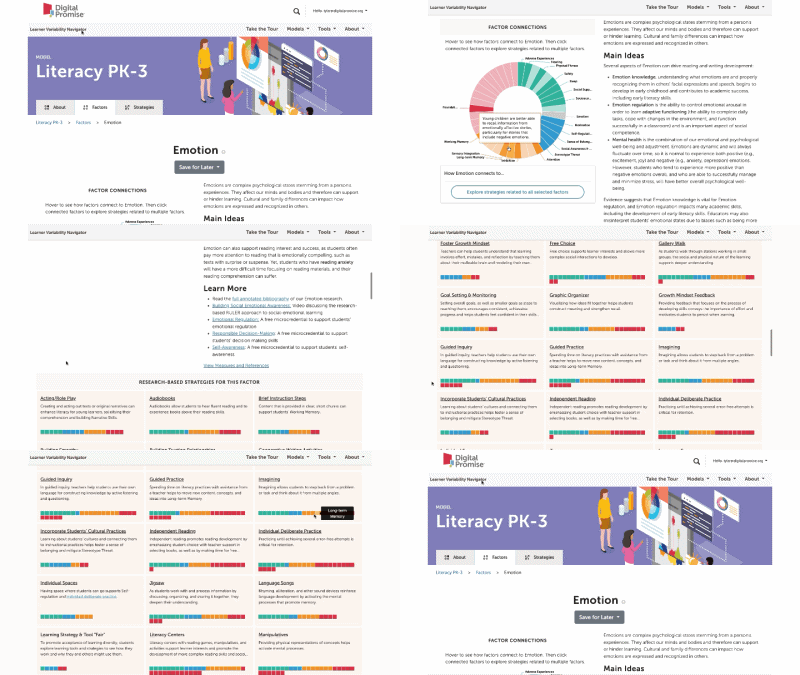
It's important for educators to develop their own cultural awareness in order to understand that students' cultural background may affect how they show emotions.
As students gradually monitor and assess their learning, they begin to recognize the limits of their own knowledge, planning strategies, and ability to evaluate resources.
Song, K..H., & Coppersmith, S.A. (2020). Working toward linguistically and culturally responsive math teaching through a year-long urban teacher training program for English learners. Journal of Urban Mathematics Education, 13(2), 60-86.
These can be in the context of workplace learning, in an educational setting, or can be informal communities that form around mutual interests.
Students build their confidence, strategy use, and comprehension by reading and rereading books.
Barbetta, P. S., & Silio, M. (2009). Effects of word prediction and text-to-speech on the writing skills of students with learning disabilities. Research, Reflections and Innovations in Integrating ICT in Education, 1(1), 1149-1159.
For academically vulnerable groups, the network approach becomes highly significant and valuable for teaching relational social capital (planning, development and evaluation of socio-educational activities that affect and modulate the organization of social networks).
Isbell, R., Sobol, J., Lindauer, L., & Lowrance, A. (2004). The effects of storytelling and story reading on the oral language complexity and story comprehension of young children. Early Childhood Education Journal, 32(3), 157-163.
Kooy, M. (2006). The telling stories of novice teachers: Constructing teacher knowledge in book clubs. Teaching and Teacher Education, 22(6), 661-674.
 Except where otherwise noted, content on this site is licensed under a Creative Commons Attribution-NonCommercial 4.0 International License


Already a user? LOG IN