Data, statistics and probability skills help learners make predictions, understand generalizations, and interpret information.
Athanases, S. Z. (1998). Diverse learners, diverse texts: Exploring identity and difference through literary encounters. Journal of Literacy Research, 30(2), 273-296.
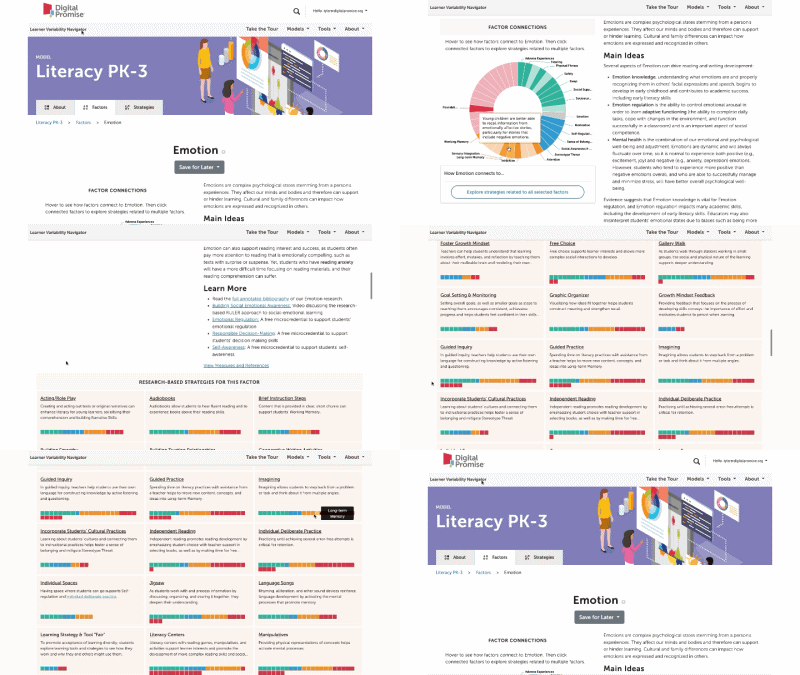
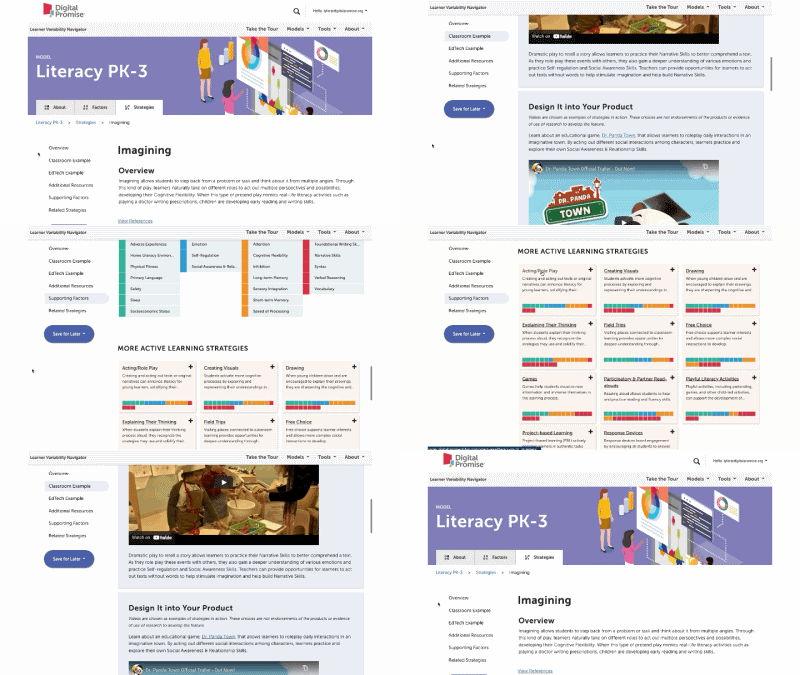
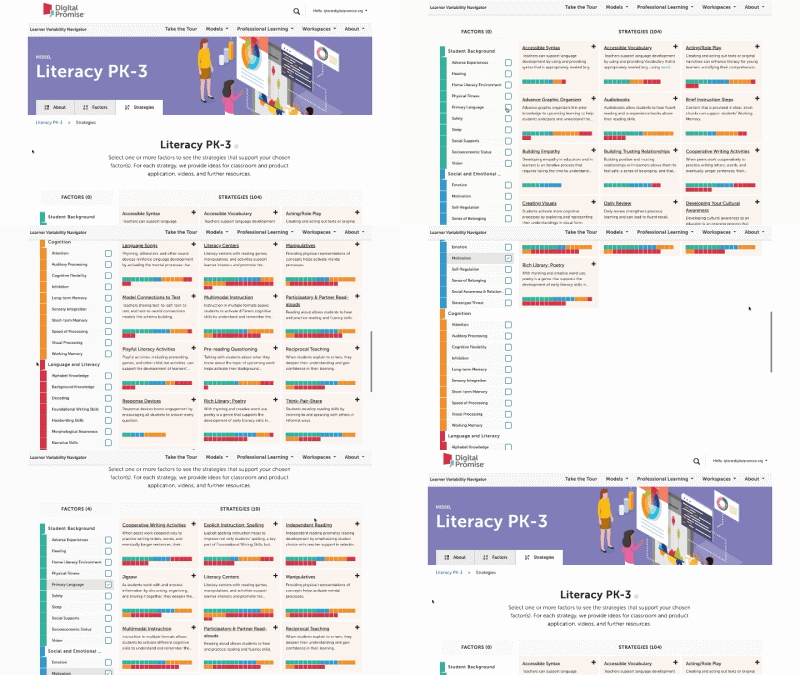
Creating and acting out texts or original narratives can enhance literacy for young learners, solidifying their comprehension and building Narrative Skills.
National Academies of Sciences, Engineering, and Medicine. (2018). How People Learn II: Learners, Contexts, and Cultures. Washington, DC: The National Academies Press.
Setlhodi, I. I. (2018). Mentoring in the web-class for adult learners. In Handbook of Research on Student-Centered Strategies in Online Adult Learning Environments (pp. 206-220). IGI Global.
Diep, A. N., Zhu, C., Cocquyt, C., Greef, M. D., Vo, M. H., & Vanwing, T. (2019). Adult learners' needs in online and blended learning. Australian Journal of Adult Learning, 59(2), 223-253.
Three-phase lesson format is a problem-solving structure to promote meaningful math learning by activating prior knowledge, letting students explore mathematical thinking, and promoting a math community of learners.
Athanases, S. Z. (1998). Diverse learners, diverse texts: Exploring identity and difference through literary encounters. Journal of Literacy Research, 30(2), 273-296.
In our society, there are many stereotypes that exist about the academic abilities of learners based on characteristics such as their race, gender, disability, and socioeconomic status.
When educators integrate the linguistic and cultural funds of knowledge that learners bring, they help learners draw on their Background Knowledge to better understand and relate to the material, supporting Motivation and learning.
 Except where otherwise noted, content on this site is licensed under a Creative Commons Attribution-NonCommercial 4.0 International License


Already a user? LOG IN