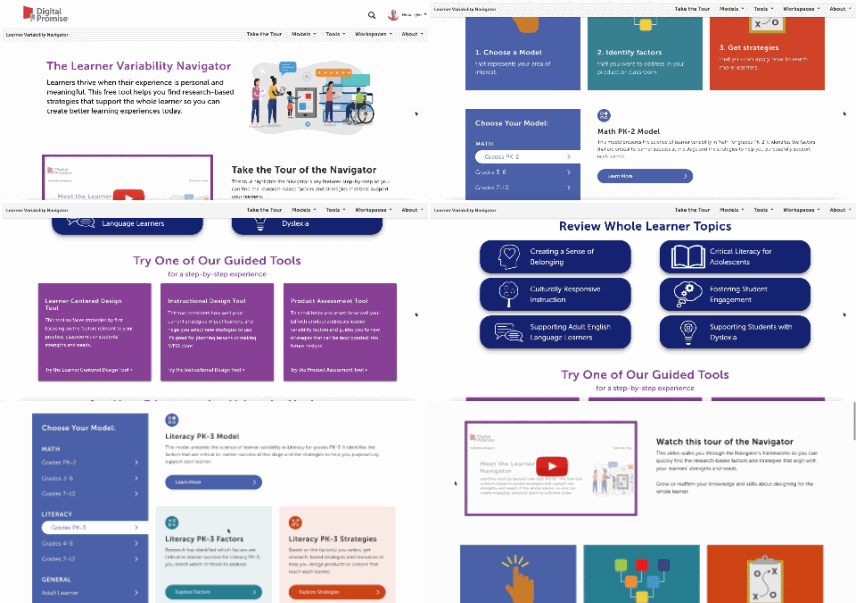
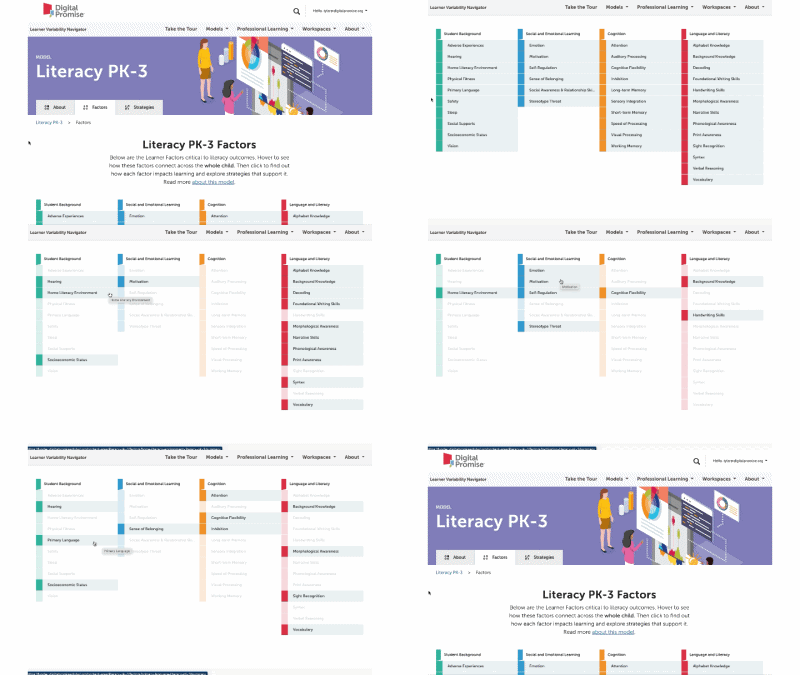
In the early grades, bilingual and multilingual language learners are less likely to be identified for intervention for special education services, including those for dyslexia.
Devlin, M., Kift, S., Nelson, K., Smith, L., & McKay, J. (2012). Effective teaching and support of students from low socioeconomic status backgrounds: Resources for Australian higher education. Office for Teaching and Learning, Sydney.
As children begin to monitor and assess their learning, they begin to recognize the limits of their own knowledge, planning strategies, and ability to evaluate resources.
Dovigo, F. (2020). Through the eyes of inclusion: An evaluation of video analysis as a reflective tool for student teachers within special education. European Journal of Teacher Education, 43(1), 110-126.
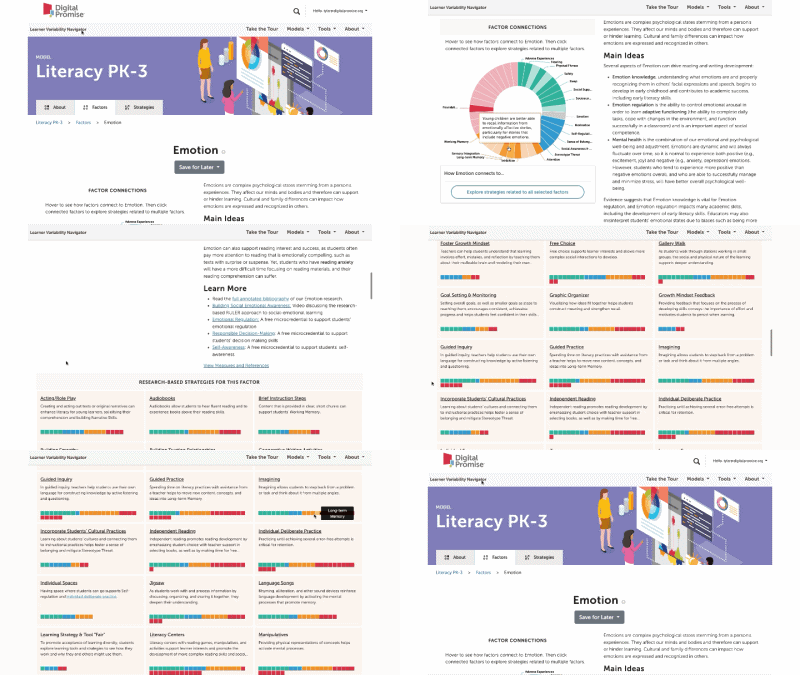
Other ways to increase reading Motivation are to talk about both students' and teachers' enjoyment of reading, create book discussion groups, provide accessible texts so all learners can engage with reading, create author studies based on popular books, and invite students to share books they enjoy with the class.
Knowles, M. S., Holton, E. F. & Swanson, R. A. (2015). The Adult Learner: The definitive classic in adult education and human resource development. (8th ed.). Elsevier Inc.
Other ways to increase reading Motivation are to talk about both students' and teachers' enjoyment of reading, create book discussion groups, provide accessible texts so all learners can engage with reading, create author studies based on popular books, and invite students to share books they enjoy with the class.
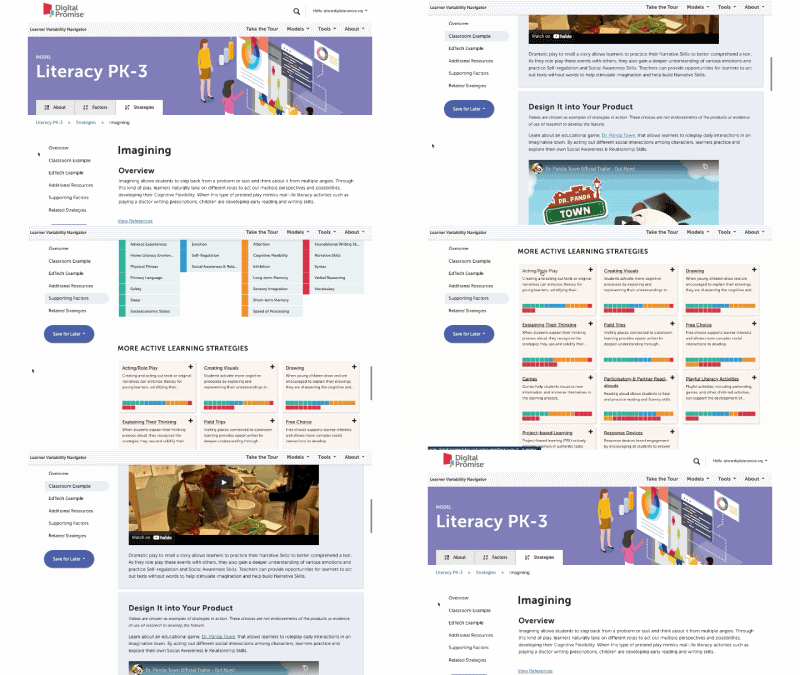
Background Knowledge for Multilingual Learners: A resource explaining the value building upon multilingual learners' Background Knowledge.
Background Knowledge for Multilingual Learners: A resource explaining the value building upon multilingual learners' Background Knowledge.
Hunt, P., Soto, G., Maier, J., Müller, E., & Goetz, L. (2002). Collaborative teaming to support students with augmentative and alternative communication needs in general education classrooms. Augmentative and Alternative Communication, 18(1), 20–35.
 Except where otherwise noted, content on this site is licensed under a Creative Commons Attribution-NonCommercial 4.0 International License


Already a user? LOG IN