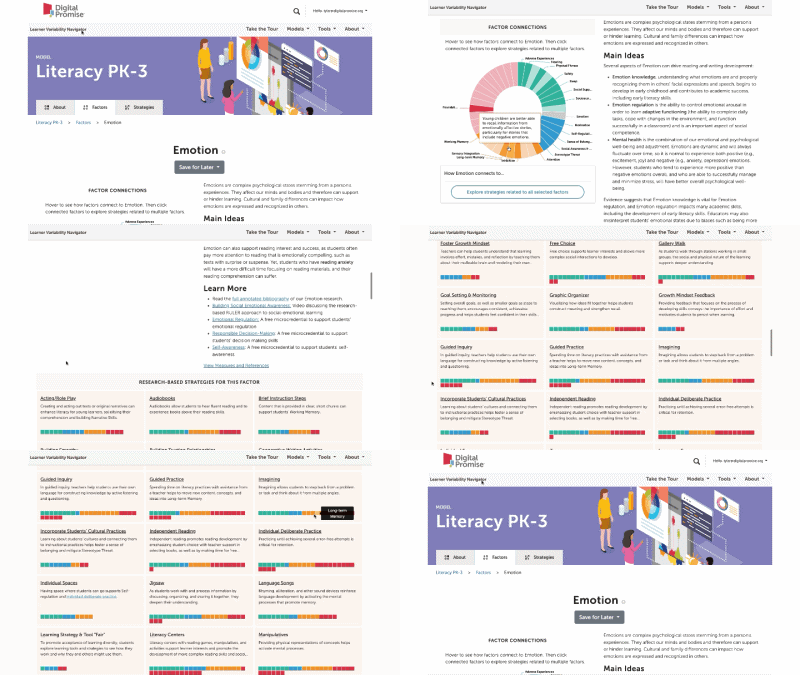
Providing opportunities in a product for learners to explore, identify, and reflect on their emotions can help learners address possible math anxiety.
Roberts, L. (2017). Research in the real world: Improving adult learners web search and evaluation skills through motivational design and problem-based learning. College & Research Libraries, 78(4), 527.
Fitton, L., McIlraith, A. L., & Wood, C. L. (2018). Shared book reading interventions with English learners: A meta-analysis. Review of Educational Research.
Chaffin, A. J., & Harlow, S. D. (2005). Cognitive learning applied to older adult learners and technology. Educational Gerontology, 31(4), 301-329.
Diep, A. N., Zhu, C., Cocquyt, C., Greef, M. D., Vo, M. H., & Vanwing, T. (2019). Adult learners' needs in online and blended learning. Australian Journal of Adult Learning, 59(2), 223-253.
MacArthur, C. A., & Lembo, L. (2009). Strategy instruction in writing for adult literacy learners. Reading and Writing, 22(9), 1021-1039.
Reid-Griffin, A., Sterrett, W., & Stanback, A. (2020). Project-Based Learning (PjBL): Providing a community of engagement for middle school learners. Journal of Classroom Interaction, 55(1), 4-25.
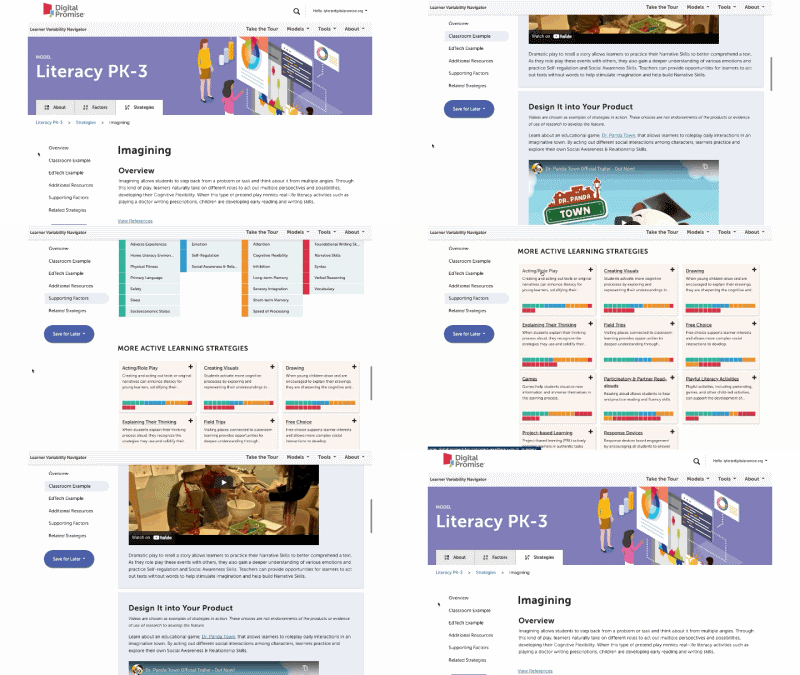
Project-based learning (PBL) actively engages learners in authentic tasks designed to create products that answer a given question or solve a problem.
Project-based learning (PBL) actively engages learners in authentic tasks designed to create products that answer a given question or solve a problem.
Project-based learning (PBL) actively engages learners in authentic tasks designed to create products that answer a given question or solve a problem.
 Except where otherwise noted, content on this site is licensed under a Creative Commons Attribution-NonCommercial 4.0 International License


Already a user? LOG IN